When choosing a beginner skateboard, it's important to examine different options thoughtfully. There are more variations among skateboards than people generally expect. With this guide, we aim to address key questions you may have, whether you’re taking up skateboarding or returning after a lengthy break.
Overview

Options for Novice Skateboarders
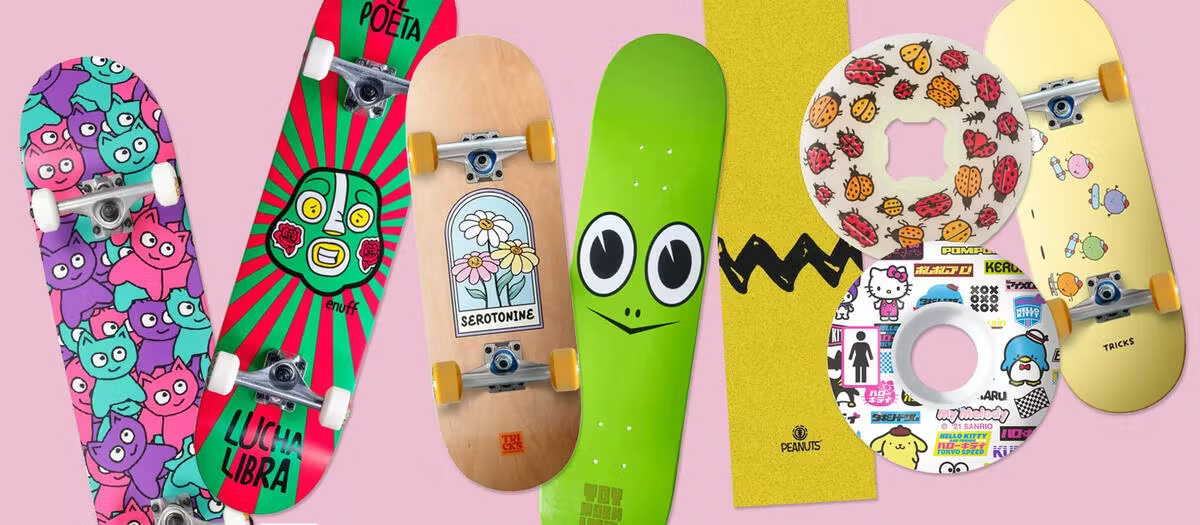
Your skateboarding style is crucial to consider when selecting your first board. Your preferences will become clearer as you improve, allowing for more tailored selections. Initially, go for a versatile skateboard that enables you to learn fundamental tricks and techniques. Specializing early on isn’t necessary.
As a novice, consider these three primary skateboard categories:
- Skateboards: Ideal for tricks, these are often used in street and park settings. They have concave decks with dual kick tails and small wheels, providing a steady platform for beginners to start their skateboarding adventures.
- Cruiser Skateboards: If your main interest is in transportation or cruising, this is your go-to option. With broader decks and softer wheels, cruisers offer increased comfort and agility, ensuring a comfortable ride on uneven surfaces. Interested in cruisers? Review our Buyer's Guide for Cruiser Skateboards or explore our top-notch Cruiser Skateboards range.
- Longboards: For those seeking a smooth, steady experience, longboards are a brilliant pick, especially for commuting and downhill rides. With styles like longboard dancing, freestyle, or downhill, longboarding provides a broad spectrum of experiences. For those keen on longboarding, see our Longboard Buying Guide, or peruse our Longboards.
This guide mainly emphasizes standard skateboards, well-suited for introductory skateboarding tricks.
What Are the Best Beginner Skateboards for Young Users?
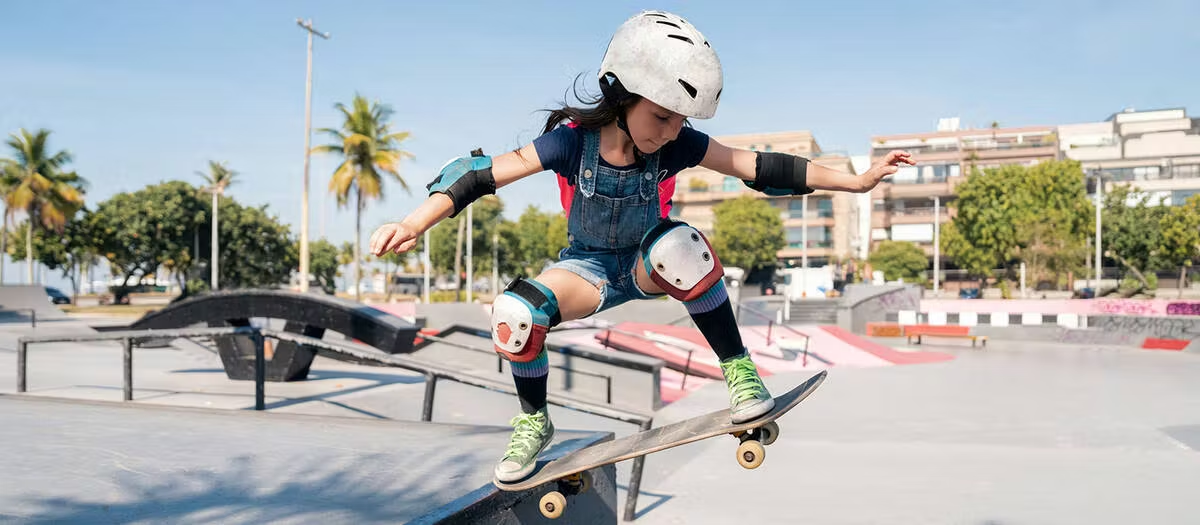
Concerns often arise about selecting beginner skateboards suitable for either girls or boys, but rest assured, diverse options are available to suit the aesthetic tastes of the user.
At the start, an affordable skateboard meets the needs, but consider selecting one capable of supporting growth as a skater.
Eventually, skaters progress to executing ollies and trick maneuvers, where a sturdy, responsive deck can be beneficial. When buying a skateboard for someone at this development stage, consider investing in a slightly pricier complete skateboard, though it's not obligatory.
Key specifications to focus on when selecting a child-friendly complete skateboard include:
- Deck width: Choose a width matching the length of the child’s shoes. A wide skateboard can be challenging to steer, whereas a narrow one may lack stability. For more guidance, see our Skateboard Size Guide or read further below.
- Wheel hardness: For novices, we suggest wheels not exceeding 92A in hardness. Softer wheels handle small obstructions smoothly, minimizing falls that can dampen the skateboarding experience for newcomers.
- Bushings: Children under 65 kg should aim for bushings softer than 90A. Bushing hardness impacts how easily a skateboard can be steered. Softer bushings (lower durometer) facilitate steering; harder bushings (higher durometer) make it more challenging.
Filter options by wheel hardness or deck length while browsing our Complete Skateboards inventory to see offerings that meet your criteria.
Optimal Skateboards for Adult Beginners

With an appropriate complete beginner skateboard, adults can embark on their skateboarding adventures with confidence, no matter their age or experience. Whether you’re starting from scratch or resuming after a break, you’ll find pre-assembled skateboards to meet your needs. Choosing wisely is crucial, particularly because adults often weigh more than teenagers.
To select the correct complete skateboard for an adult beginner, focus on these aspects:
- Wood type: Opt for a 7-ply maple deck. Avoid Chinese maple due to its softer, less durable nature, primarily because of the quicker growth of trees there. Maple from colder regions, where trees grow slowly, is generally harder, offering greater "pop" and resilience.
- Adult skateboard size: Compare your shoe length to the skateboard deck width to find the right size. Choosing an adequately wide deck makes steering easier. Initially, it’s best to follow our general guidance (outlined below). As you advance, you might develop preferences outside these suggestions.
- Wheel hardness: Beginners are advised to choose a wheel hardness below 97A. Hard wheels transmit surface vibrations more intensely, while softer wheels are not as responsive. Soft wheels are generally better for beginners, while experienced skaters often prefer wheels rated above 97A.
- Bushings: The bushings' hardness affects steering ability. The heavier you are, the harder your bushings should be. People weighing between 65 - 79 kg should choose 85A to 95A bushings, while individuals over 80 kg should opt for 91A or harder bushings.
Returning to Skateboarding as an Adult
It's never too late to skateboard! Even if you've had a break, you're not starting anew, and your past experience is still useful. Skateboarding fundamentals remain unchanged—a wood deck, two trucks, and four wheels.
Want to return to skateboarding? Select a skateboard that suits your needs and allow muscle memory to take over. Whether you want to master the skatepark or explore local street spots, choose gear aligning with your objectives.
Boards for older skaters usually excel in cruising, as many feel less inclined to pursue intense trick sessions. If resuming skateboarding as an adult, a broader deck with softer wheels is advisable. For occasional technical tricks, ensure your board has kick tails on both ends.
Seasoned skateboarders jumping back into the sport likely have knowledge about skateboards and components, making custom-building a skateboard appealing. Use our Custom Skateboard Builder or explore our vast selection of Skateboard Parts to assemble your tailored setup.
Selecting the Correct Skateboard Size for Newcomers
Our skateboard size chart will guide your selection for a suitable beginner skateboard. Deck width is the principal concern when evaluating skateboard sizes. Your preferred deck width will likely evolve. As interests in specific skateboarding styles develop, you’ll choose sizes suited to those styles. For now, we recommend picking sizes based on your shoe size.
When purchasing a beginner skateboard for a child, relying on the size chart is an effective strategy.
| Skateboard Width | Recommended Age | Shoe size US | Shoe size UK | Shoe size EU |
| 6.5" | 3 - 5 | 6C - 11C | 5Y - 10Y | 23 - 28 |
| 6.75" | 3 - 5 | 7C - 11C | 6Y - 10Y | 24 - 28 |
| 6.825" | 4 - 6 | 9C - 12C | 8Y - 11Y | 26 - 30 |
| 7.0" | 5 - 7 | 10C - 1 | 9Y - 12Y | 28 - 32 |
| 7.125" | 6 - 8 | 11C - 2 | 10Y - 1 | 29 - 33 |
| 7.25" | 7 - 9 | 12C - 3 | 11Y - 2 | 30 - 34 |
| 7.375" | 8 - 10 | 13C - 4 | 12Y - 3 | 31 - 35 |
| 7.5" | 9 - 11 | 1 - 6 | 13Y - 5 | 32 - 38 |
| 7.625" | 10 - 12 | 2 - 7 | 1 - 6 | 33 - 39 |
| 7.75" | 12 - 14 | 4 - 9 | 3 - 8 | 35 - 42 |
| 7.875" | 12 - 14 | 4 - 9 | 3 - 8 | 35 - 42 |
| 8" & Up | 14 & Up | 9 & Up | 8 & Up | 42 & Up |
Helpful Skateboard Advice for Beginners
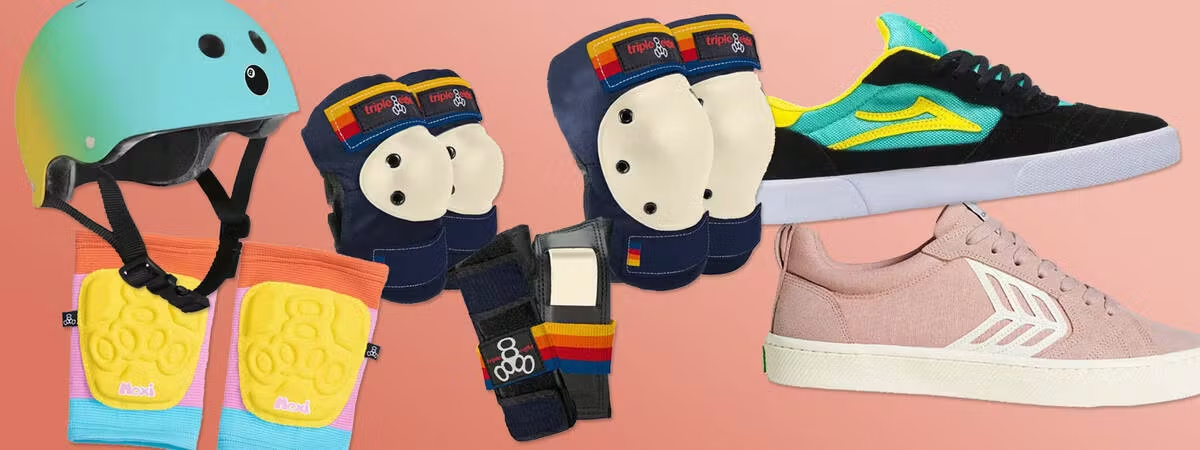
Mastering skateboarding basics requires time and dedication, but perseverance is key. Enjoy yourself, trust your instincts, and soon you’ll be effortlessly navigating skateparks. Here's some practical advice that might help:
Beginners’ Skateboard Safety Gear
We highly recommend that all skaters—from novices to experienced pros—wear helmets and pads. Fear of injury can impede your progress, but quality wrist, knee, and elbow pads, paired with a certified skate helmet, can mitigate these fears and enhance your performance. Safety gear is a must!
See our collection of Skateboard Pad Sets and certified Skateboard Helmets.
We also offer top-notch children's helmets and skateboard pads in our Skateboard Protection for Kids range.
Skate Footwear
Investing in proper skate shoes from popular brands is worthwhile. Although you can start with any sneaker, professional skate shoes will become a consideration over time.
What benefits do genuine skate shoes offer?
To start, they enhance your skating performance: with their flat soles and superior grip, these shoes offer excellent traction on the skateboard. The soles are crafted to maximise "board feel," improving your sense of control over the skateboard, which leads to greater responsiveness and better command of your movements.
Furthermore, skate shoes are built to withstand the demanding conditions of skateboarding. The sport is indeed tough on your shoes. High-quality skate shoes are more durable and can withstand many more sessions than an ordinary pair of sneakers.
Explore our range of Skate Shoes.
Apparel for Skateboarding
When you skate, you require trousers that are both flexible and hard-wearing. As a novice, you are likely to fall frequently, which will affect your clothing. Moreover, your trousers should not restrict your ability to move. Skate trousers made from stretchy materials or with a loose cut are advisable.
If your trousers allow easy movement and are made of robust fabric, they are well-suited for skating. In reality, many popular skate trousers are actually work trousers. Check out our range of trousers to find your next dedicated Skate Pants, and also explore our excellent selection of Skater Belts!
Adjusting the Trucks
You can calibrate your skateboard's maneuverability by changing the tightness of the trucks. The skateboard should respond to your lean while rolling. If this is not the case, consider slightly loosening the trucks. On the other hand, if you struggle with control due to excessive movement, tighten the trucks. Modifying the kingpin nut can significantly alter your skateboard's ride!
Since skaters have varying weights and heights, the force they exert on the trucks differs. Consequently, there's no universal setting for truck tightness, so experimenting to find your ideal balance for stable and consistent riding is recommended.
Watch this video to discover how to adjust your skateboard trucks, and remember, a Skate Tool is a budget-friendly investment that lasts.
Components of a Skateboard – Understanding Your Board
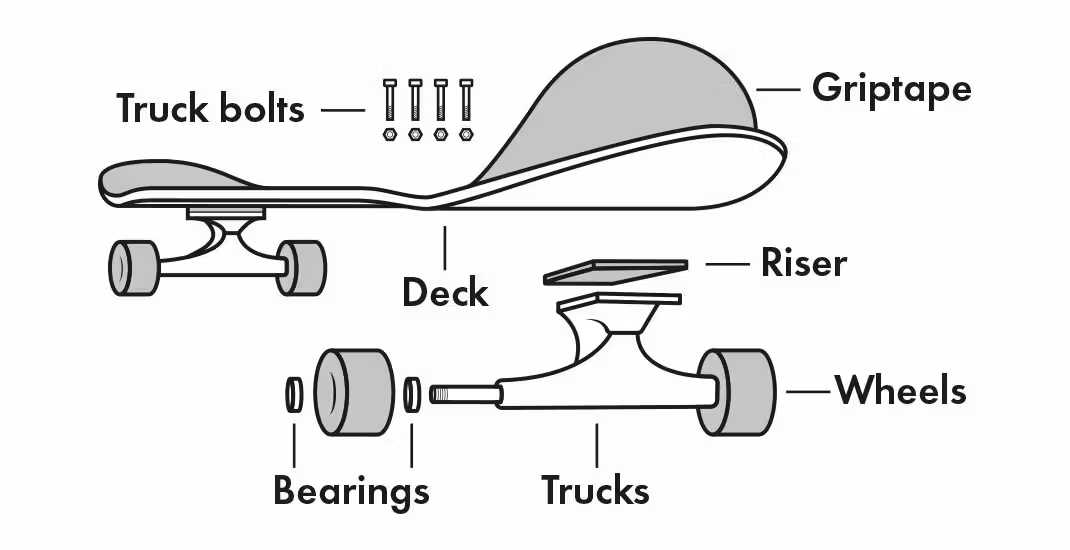
If you're truly invested in skateboarding, building your own custom skateboard is optimal. Even if you purchase a beginner setup, it's advantageous to have knowledge of the essential skateboard parts - also known as the anatomy of a skateboard.
There are excellent reasons to choose a custom skateboard as a beginner. Whether you're drawn to the artwork on a standalone deck or desire high-quality trucks, creating your own skateboard enables you to pick the precise components you want.
If the idea of applying grip tape or attaching wheels seems daunting, our Custom Skateboard Builder can handle the assembly for you, ensuring that your skateboard arrives ready to hit the streets.
Here’s a brief overview of the various parts of a skateboard:
Decks for Skateboarding
Skateboard decks are generally made from multiple layers of wood called ply. Most trick skateboard decks are crafted from 7-ply maple. For beginners, decks made from stronger types of maple are ideal for durability. The deck is a key element of a skateboard, serving as the stage for tricks and maneuvers.
Read our in-depth Guide to Buying Skateboard Decks, or explore our comprehensive range of Skateboard Decks.
Trucks for Skateboards
Positioned beneath the skateboard deck, skateboard trucks consist of metal T-shaped parts where the wheels are attached. Acting as the steering systems for the complete skateboard, they are critical in setting its interaction on the streets and its maneuverability.
For further insights on skateboard trucks, including bushings, hangers, and baseplates, see our thorough Skateboard Truck Buying Guide. If you know what you're looking for, search through our full lineup of Skateboard Trucks.
Wheels for Skateboards
Skateboard wheels are crafted from polyurethane, offered in various sizes, and degrees of hardness. They significantly influence the board's fluidity, speed, and grip on the surface.
As a beginner, paying attention to the wheels' hardness is crucial, which is always measured using the durometer scale. These are our recommendations for novice skateboard wheels:
- Kids should choose wheels with a durometer of 92A or less.
- Adult beginners are advised to go for wheels rated at 97A or lower.
Those new to the art of tricks should opt for wheels within the 52 - 54 mm diameter range.
To delve deeper into skateboard wheels, view our detailed Guide to Buying Skateboard Wheels. Feel free to explore our extensive assortment of Skateboard Wheels. Use filters for hardness and other specs to find your ideal wheels.
Bearings for Skateboards
Housed within the wheel cores, skateboard bearings facilitate smooth and efficient wheel rotation, allowing the skateboard to glide with minimal resistance. Bearings come with different ABEC ratings, from ABEC 1 to ABEC 9, with higher numbers signifying a smoother glide. However, in skateboarding, factors like material quality, lubrication, and upkeep are more influential on bearing performance than the ABEC rating itself. Thus, as a newcomer, concentrating on the ABEC rating is unnecessary.
If your wheels are not spinning efficiently, refer to our guide on How to Clean and Maintain Bearings.
Explore our full array of Skateboard Bearings or delve into the specifics with our thorough Bearing Guide.
Griptape for Skateboards
Skateboard griptape is the abrasive, sandpaper-like material layered atop the deck. It assists in board control and prevents foot slippage. The friction from dragging your feet over the surface, combined with a sharp tail kick to the ground, allows you to elevate the board during ollies effectively.
Griptape comes in various hues, with or without graphics or in clear versions. Check our range of Skateboard Griptape to see the choices available!
For those applying griptape, here’s a concise video guide on doing so: