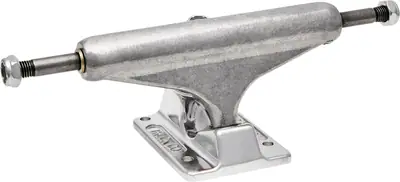
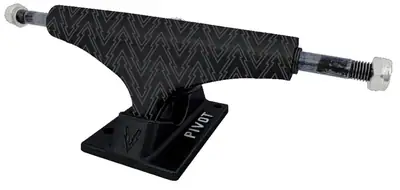
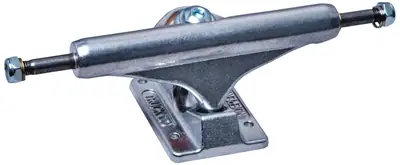
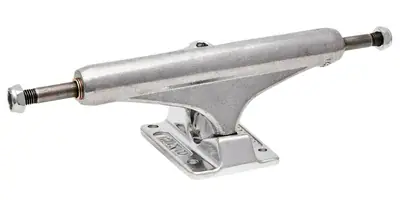
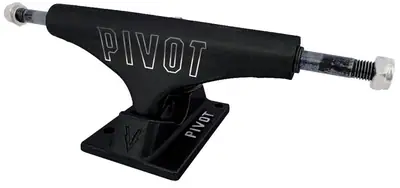
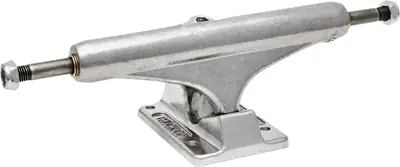
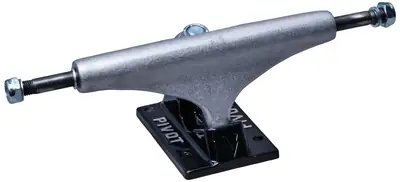
Skateboard bushings, also referred to as truck rubber or cushioning, are crucial components of your skateboard setup. The shape and hardness of your bushings significantly influence the way your board turns, responds, and feels when ridden.
- Increased stability and potentially a more responsive feel are provided by harder bushings.
- Turning and steering the skateboard with ease is facilitated by softer bushings.
Overview

Defining Skateboard Bushings
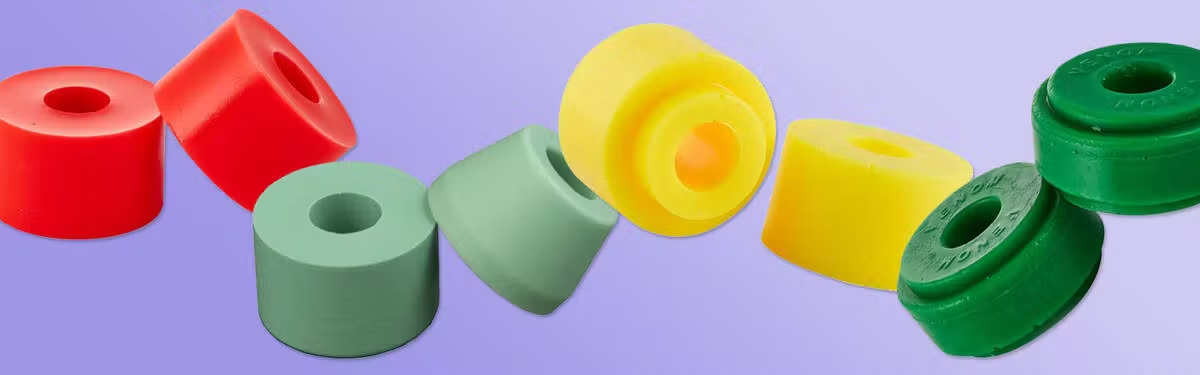
Skateboard bushings are urethane rubbers, either cylindrical or conical, that are positioned on the kingpin of the trucks. Their function is pivotal in allowing you to steer and control the skateboard, making their influence on skateboarding characteristics quite substantial.
Each skateboard truck accommodates two bushings:
- Top bushing – oriented towards the ground.
- Bottom bushing – oriented towards the deck.
The bushings adjust in shape according to your movements when you shift weight to either side of the deck. This adjustment causes the trucks to pivot, effectively altering your movement's direction. The intensity of this pivoting dictates the sharpness of your turns. The ease with which the bushings adjust to your movements heavily impacts the force required for truck pivoting.
→ The equilibrium between agility, responsiveness, and stability is defined by your bushings' hardness or firmness.
Impact of Bushing Hardness on Your Skateboard
- Softer bushings allow for easier turning by loosening the trucks.
- Truck tightness and stability are enhanced by harder bushings, which resist pressure more effectively.
When Harder Bushings May Be Required...
... if the board feels overly loose:
Opt for harder bushings if speed wobbles occur or if more stability is required due to overly loose trucks.
... to address wheelbite issues:
Mitigating wheelbite risks can be achieved with harder bushings. It's advisable to assess truck tightness initially and consider risers if needed.
... upon maxing out the kingpin nut:
Consider switching to harder bushings if the kingpin threading emerges from the nut or if bushings deform under washer pressure. Hint: A spare correctly-sized washer under the truck bushing washer can reduce exposed threading.
When Softer Bushings May Be Required...
... if steering and initiating turns require excessive effort:
Turning becomes less strenuous with softer bushings.
... for those drawn to carving and cruising:
Simplified carving and sharper cornering both result from softer bushings.
... if a flexible and fluid ride appeals to you:
For a board that smoothly responds to minor shifts, softer bushings offer flowing, reactive control.
Skateboarders favouring looser trucks have myriad reasons, with some even removing the top bushings for extreme (albeit noisy) flexibility (though we don't endorse this approach).
The Relationship Between Bushing Hardness and Body Weight
Your weight affects the responsiveness of your bushings: heavier individuals require less effort to apply pressure, whereas lighter individuals need softer bushings for equivalent responsiveness.
We have assembled a table advising on bushing hardness based on user weight. It's important to note that body weight is only one aspect and does not account for personal preferences. This chart serves as a foundational guide for those beginning to experiment with various bushing hardnesses.
→ Your existing bushings are the best reference. Knowing the durometer rating allows you to adjust for a harder or softer feel as preferred.
| User Weight (kg) | Rider Weight (lbs) | Softer / Looser Setup (Durometer) | Stiffer / Tighter Setup (Durometer) |
| <65 kg | <143 lbs | 81A - 85A | 86A - 90A |
| 65 - 80 kg | 143 - 176 lbs | 86A - 90A | 91A - 95A |
| 80 - 90 kg | 176 - 198 lbs | 91A - 95A | 96A - 100A |
| >90 kg | >198 lbs | 96A - 100A | 100A |
Children's complete skateboards are crafted with a well-balanced bushing setup suited to their weight and movement. New trucks are typically equipped with bushings that meet most skaters' needs, with wider trucks commonly having slightly firmer bushings compared to narrower versions.
→ When selecting a new complete skateboard or trucks with pre-installed bushings, focus on both skateboard and truck widths, as these combinations are likely to be effective.
The Influence of Bushing Shapes on Performance
Varying bushing shapes are available, each affecting how the truck functions.
- Conical (resembling a cone): usually a top bushing, providing responsiveness.
- Barrel (straight form): generally a bottom bushing, offering stability.
The typical arrangement involves combining cone and barrel-shaped bushings as described above. A cone atop a barrel achieves balance. Double barrel configurations add stability, whereas reversing the arrangement enhances responsiveness.
Adjusting the Kingpin Nut to Alter Truck Tightness
- For firmer trucks with less agility, tighten the kingpin nut (turn clockwise).
- Loosening the kingpin nut (turn counterclockwise) allows for easier turning.
If initiating turns proves difficult and you find yourself lifting the front wheels to steer, try loosening the trucks. Should the trucks feel overly loose, moderate tightening may help regain control.
Identifying When Bushings Require Replacement
Examine bushings for signs of cracking, splitting, or stickiness, as these indicate wear and diminished performance. Replace worn bushings instead of tightening trucks as a countermeasure.
If your current bushings remain effective and you appreciate how your skateboard performs, replacement isn't necessary. However, the wear signs mentioned imply you will eventually need to address the issue. When the moment to upgrade arrives, find your required replacements here: